Easy Lowfat Pav Bhajji and Grape-Avocado Chaat

vegsoup
happy shortcut for easy pav bhajji

Sometimes you stumble upon a happy shortcut that makes cooking so simple, it’s ridiculous. This “cheater’s version” of pav bhajji using a can of soup is a go-to recipe for me whenever I’m short on time. I always have the ingredients handy!

You can use frozen and/or canned veggies. Canned potatoes work particularly well for this dish. I know most recipes call for peas — if I’m weight-watching (err, always, all ways!) I usually leave them out in favor of more green beans or another less starchy veg. The soup has a few peas, as well as corn which adds an interesting little crunch to the mashed mix.

This is my weight-watcher’s dream dish — big on flavor and low in fat.
Of course, one teeny pat of butter on top never hurt anyone… ;)

Easy Lowfat Pav Bhajji
makes a BIG batch!

In a large frying pan, heat 1 tsp canola oil over medium heat.

When hot, add:

1/2 c chopped onion (fresh or frozen)
1 tsp each ginger and garlic paste

Saute for several minutes, then add:

1 can sliced potatoes
1 16oz pkg frozen cauliflower
1 c frozen green beans

optional:
1/2 c frozen or fresh carrots
1/2 c frozen peas

Reduce heat to med-low, cover and cook about 10-15 minutes, until frozen veggies are no longer hard. Then stir in:

1/2 tsp chili powder
1/4 tsp turmeric
1 heaping TB pav bhajji masala (I like MDH)

Mix well to blend spices, then add:

1 can Progresso Vegetarian Vegetable Soup
(rinse the bottom of the can with 1/2 c of water and dump that into the pan too)

Give it all a good few turns with a wooden spoon, then raise heat to medium, cover, and cook 10-15 minutes, stirring occasionally to prevent sticking. At this point the veggies should be soft — mash everything with a potato masher and continue to cook another 5-10 minutes, until the bhajji has thickened and smells deeeeeeelicious. Taste and add a little more masala if needed. Add salt at the very last — the soup is salty so it may not need any extra.

easypavbhajji
easy, lowfat pav bhajji with oat bran pita on ’spiral’ by Hocking glass, circa 1928

Serve with Joseph’s oat bran pitas for a ww treat — or with toasty buttery bread a la dear Nupur, if you want to indulge!

parrotglass
here is the bhajji in a depression glass sherbet cup ~ the pattern is called ‘parrot’ or ’sylvan’ by Federal glass, circa 1930 ~ if you look closely you can see the two parrots :)

~~~~~

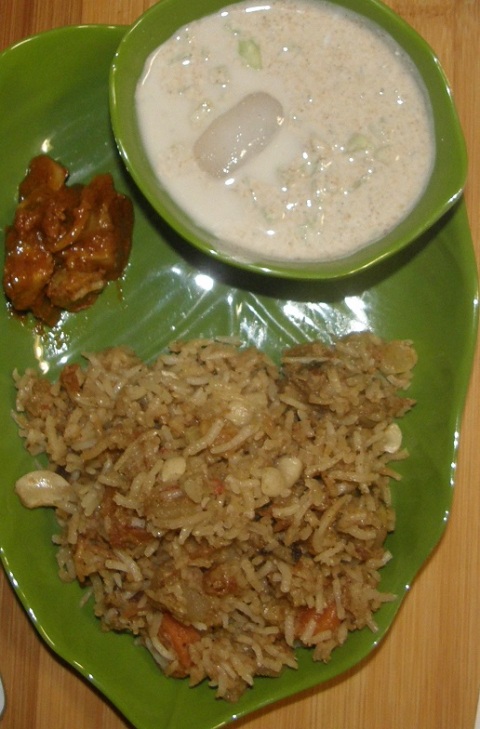
I also tossed this little chaat together with cubed avocado, halved grapes, a little yogurt mixed with salt, pepper, and a pinch of sugar, and some spicy boondi. After I took its photo I realised the dish was a pattern called ‘tea room’ — ha! ;)

tearoomchaat
grape and avocado chaat in a ‘tea room’ bowl by Indiana glass, circa 1926

Comments (6)

What Happened To…

…. the lazy, hazy, crazy days of summer?


have a listen to Nat King Cole’s classic, set to pics courtesy of Snowqueen555.
The last sunset pic reminds me of Michigan,
so thanks, Snowqueen, whomever you may be!

Well it’s certainly crazy, but not hot and hazy — more like a June monsoon in my neck of the woods. If New England has seen five sunny days this month, I’ll eat my hat. Also not much time for lazy! The girl-child is off to drivers’ ed and then summer camp — while the boy-child is on break between classes and a summer internship. It seems once school lets out, life gets more hectic! I was, however, fortunate to enjoy a visit to my beloved upper peninsula over the past couple of months.

sandhillcranes_crop2
sandhill cranes ~ twenty miles north of nowhere and just south of Lake Superior

snowbuntings wfp
snow buntings playing at whitefish point

wfplightandpt
the lighthouse at whitefish point ~ with a laker far off on the horizon

paradiseagate4_09
lake superior agate

ryerson1_crop
dream boat ~ the Edward L. Ryerson ~ steaming downbound from the Soo

paradise409_a
a sunset in paradise…

And the garden, of course, takes much spare time in a most rewarding way!

As a very late birthday gift, I bought myself some organically grown heirloom tomato plants which arrived late in May, all the way from California (thanks, mom!).

In spite of the heavy rains and lack of sun, these tomatoes are taking off.

mariannaspeace1
marianna’s peace ~ heirloom ‘potato-leafed’ tomato ~ early June

mariannaspeace
… and late June

How does your garden grow?

Oh, and by the way… I’ve been cooking too, albeit mostly simple things of late.
I am hoping for some hot weather in July to get homemade dosa/idly batter going quickly! Tonight, it’s cool and rainy, so it’s this Udupi temple special from Ramya’s Mane Adige ~ a dish so delectable that it’s become a fast favorite. She made hers with brinjal; I also added pumpkin to mine in the form of sweet buttercup squash. So sweet in fact, that I didn’t add much jaggery. The squash was also a good thickener, so I didn’t use coconut. And of course, for seasoning, it was none other than ISG’s magical sambhar podi :) No photos of that, as it’s still on the stove, but check out Ramya’s pic and you’ll be drooling, I promise. Thanks, Ramya!

Comments (3)

Quick Capsicum with Home-Style Roti ~ From Sukham Ayu

quick-capsicum-with-rotla-from-sukham-ayu
my rendition of quick capsicum with home-style roti ~ from Sukham Ayu

I wanted to illustrate the ease of Ayurvedic cooking as presented by
the authors of Sukham Ayu. As always, their generosity of spirit shines through;
Pratibha and Jigyasa graciously agreed to let me reprint a recipe here.

Many thanks, ladies!

I chose this green pepper curry because it uses ingredients easily found just about anywhere. Indeed, many recipes in the book call for standard items found in most Indian kitchens — although I was surprised to learn that cow’s milk is hard to come by in India. I have encountered only one unfamiliar ingredient: brahmi leaves.

According to the authors, capsicum is recommended for kapha and vata doshas due to its slightly pungent quality. The original recipe calls for roasted sorghum or green gram flour. Using the helpful and comprehensive food guide at the end of the book, I adapted it to suit my taste by substituting roasted besan (bengal gram flour). I remembered that from Indira’s Bell Pepper Zunka way back when; and more recently from my experiments with bell pepper pakoda. I know I am repeating myself, but there *is* something special about bell pepper and besan. I was glad to learn they’re both good for my prakriti — constitution.

Enough of my rambling — on to the food :)

Quick Capsicum with Basic Home-Style Roti
recipes from Sukham Ayu ~ Cooking at Home with Ayurvedic Insights

The home-style rotis are basic indeed — whole wheat flour and water, with a drop of ghee to moisten the hands while kneading. I won’t repeat the instructions as I am sure they’re fairly universal, as rotis go. The proportion of whole wheat flour to water is approx. 2:1.

I made them for practice :) Also, they taste great with the nutty capsicum curry.

blob
the first roti ~ affectionately known as ‘the blob’

As you can see, I need plenty of practice!

unblob
at last, slightly round ~ and puffing up!

OK, now that I finally made a semi-round roti, we can cook peppers –
and this time, I will type verbatim:

The Peppers

Green capsicum ~ 4 medium-sized
Spring onions (with leaves) ~ 1 bunch
Sorghum or green gram flour ~ 2 TB
Coriander powder ~ 2 tsp
Cumin powder ~ 1 tsp
Red chilli powder ~ 1 tsp
Coriander leaves ~ to garnish
Powdered rock salt ~ to taste

The Tempering

Cow’s ghee ~ 1 TB
Mustard seeds ~ 1/2 tsp
Turmeric powder ~ a pinch
Asafoetida powder ~ a pinch

1. Chop the capsicums into 1 inch squares and the spring onion bunch finely.

2. Dry roast the flour over low flame for 1-2 minutes until the aroma rises. Set aside.

3. For the tempering, heat ghee in a wok. Add the mustard and as it splutters, add the turmeric and asafoetida powders. Immediately, toss in the spring onions and capsicums, reduce flame and saute for 2-3 minutes.

4. Sprinkle the roasted flour over the vegetable. Add coriander, cumin and chilli powders along with salt. Stir well, cover and cook for another 2-3 minutes.

Garnish with chopped coriander leaves and serve fresh with Roti and any Dal from this collection.

~~ You may substitute capsicum with fenugreek or spinach leaves ~~

To learn more about Ayurveda, visit KARE.

To learn more about Sukham Ayu, visit Pritya.

Recipes in this post are copyright by and courtesy of
Jigyasa Giri and Pratibha Jain

Next up, ISG’s no-ferment oats ‘n grits dosas!
Yes, ISG, I finally got some steel-cut oats :)

And last but not least, can’t resist leaving you with this…

daisybox
daisy-in-a-box ~ ah, springtime sundays…

Comments (19)

Embracing Ayurveda with Sukham Ayu

Not long ago, I was the fortunate recipient of Sukham Ayu,
authored by the same talented ladies who invited us into Pedatha’s world in Cooking At Home with Pedatha.

Given my interest in Indian cuisine and culture, I was, of course, aware of Ayurveda. I had seen it mentioned and read a little. I never delved deep.
Perhaps because I am not Indian, I keenly felt what I perceived as my shortcoming. Ayurveda was far away, out there somewhere, high above me — residing on a plane beyond the realm of my understanding.

I was so wrong.

Cooking at Home with Pedatha brought the delights of traditional Andhra cookery within anyone’s reach. All you needed was a stove and pot, a few spices, and a willingness to learn — you, too could make Pedatha’s vangi bath!

With Sukham Ayu, in similar fashion, dear Jigyasa and Pratibha have lifted the veil of mystery from Ayurveda.

With their trademark ease, they have showcased the beauty and simplicity of age-old principles; making Ayurveda accessible to anyone with an open mind so that we may all reap the benefits of this ancient art.

The ability to bridge, through printed word, a world full of physical and cultural divides is truly a gift, and Sukham Ayu is truly a spectacular book. Once more I feel honored to be invited to the table — not only as a guest, but as an eager participant in the kitchen aforehand. All the while, I am embracing Ayurveda, and breathing deeply of the soul-food found in the lush greenery of the Western Ghats, above Mulshi Lake.

soya-pulav-with-jalepenos1

soya pulav from Sukham Ayu, served with oat-bran pita and spicy gongura pickle to temper my kapha and vata doshas

Comments (12)

Lowfat Ma Po Tofu, Spring, and a Chinese Dosa?

I just had to show you this — a Chinese dosa??

It’s spring at last!!

Finally, the days are longer and the thermometer is ever so slowly creeping upward. All the extra sunshine is soaking into my bones to wake me from a long winter nap. Of course waking up from winter naps means taking out spring clothes, and as usual, too much winter makes too much me!

To that end, I picked up a package of Nasoya Light silken tofu, and thought about that melt-in-your-mouth Chinese dish, ma po tofu. I wanted to try it without the oil called for in most recipes. And while it can be made without pork and without too much oil, it can’t be made without Sichuan hot bean sauce (or paste), and for that I ventured out to my favorite Asian market. I’m usually in there buying Indian groceries — today it was a little trip to China.

chinesefood2
chinese groceries, clockwise from top left ~ sichuan peppercorn (tepal), light and dark soy sauces, dried fungus, canned water chestnuts, canned sichuan hot bean paste, sesame oil (Japanese brand)

Next time I will invest in a jar of the hot bean paste rather than the can. I think the jars have more chili heat. Made with fermented soy or broad beans, this paste is *very* salty; between that and the dash of saltier-than-regular light soy sauce, the salt shaker is not necessary. Taste the bean paste before beginning to determine how much chili powder is needed. The dish should be quite spicy.

cloudearbefore

cloudearafter

wood ears ~ before, top, and after soaking, right

This comes together so quickly it could easily be a weeknight meal. It’s mostly based on the recipe in my favorite Chinese cookbook: The Taste of China by Ken Hom.

Ma Po Tofu

1 tsp canola oil
2 TB each garlic and ginger, minced
1 1/2 TB sichuan hot bean paste
1 tsp chili powder (or to taste)
1/2 tsp Chinese light soy sauce
2-3 dried black fungus (wood ear, tree ear), soaked, drained, and thinly sliced

1 block silken tofu, drained well and cut in cubes
(mine was Nasoya light, 16 oz)

2 TB cornstarch mixed with 2 TB water

1/4 c green onions, sliced
1 tsp toasted sesame oil

1 tsp sichuan peppercorns, toasted and powdered

~~~~~

In a wok or large non-stick frying pan, heat oil over medium heat. Add garlic and ginger, saute a minute until fragrant, then add bean paste and chile powder.
Stir-fry 2 minutes, then add about 1/2 c water to prevent burning. Add wood ears and stir well.

Cover and simmer on med-low about 5 minutes, then gently add the tofu.
Use a wooden spoon to gently stir the mixture, then cover and simmer over low heat about 15 minutes.

When ready to serve, uncover and raise the heat to med-high.
When the mixture bubbles, add the cornstarch-water mixture and stir thoroughly.
Fold in the green onions, drizzle with the sesame oil, and give the mixture a final turn.

Remove from the heat to a serving bowl, and garnish with the ground sichuan pepper.

Serve hot over steamed rice. I had mine with plain steamed cauliflower as a substitute.

Tips: soak dried fungus/wood ears in hot water for about 15-20 minutes to reconstitute. Cut out the tough edge, then roll up and slice like a cookie-dough roll. If you’ve never cooked with these before, don’t be put off by the name. It has no real taste of its own, but provides a nice crunchy texture.

You can toast the sichuan peppercorns in the microwave for about 30-45 seconds. Then grind as you would any dry roasted spice. Don’t try to crush in a mortar and pestle as I did — you’ll be picking little sichuan peppercorn coverings out of your teeth!

mapotofu2
spicy low-fat ma po tofu over cauliflower

anther yummy version:

Pel’s Ma Po Doufu (vegan)

~~~

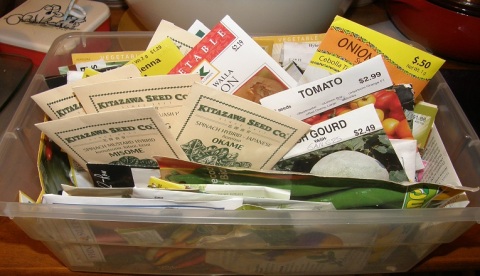
All I can think about is getting back into the garden. I have ordered tomato plants already(!!) to arrive mid-late May. I’ve rounded up all the seeds leftover from last year — many from dear ISG — plus the things I saved over the winter.
I have picked up two types of cucumber and three varieties of long beans to try, okra, and calaloo, not to mention seeds for mint, dill, oregano, and of course catnip! Pinkie loves catnip — perhaps Daisy will take to the fresh variety.

legokitties
pinks and daisy being lego-kitties

daisysunshinecrop
daisy in early spring sunshine

What will you plant in your garden this spring?

Comments (13)

Food For the Soul ~ Kanji, Payar, and Kadachakka Thoran from Shn

I had a jar of breadfruit. Actually I’ve had it for a month. I can never resist a new food and when I saw it in a new store, I had to buy it. I looked for recipes, and I came across Shn’s wonderful post.

Things happen for a reason right? The breadfruit led me to kanji and payar — suddenly I felt it was well worth the wait :)

hmmmmmm
hmmmmmm…

breadfruit
breadfruit!

kadachakka
kadachakka thoran ~ breadfruit dry curry ~ recipe from shn’s mishmash

mmhmmmm
mmhmmmm…payar… from mishmash ~ aka shn :)

mhmmhmm
mhmmhmm…

rosematta-rice-gruel
kanji from dear shn

The photos are mine, but this outer-space-creature (haha, Sandeepa!) got the recipes from Shn at Mishmash! and the idea to put the kanji in a glass, as well as much insight, from Inji. Many thanks to you both! :)

Comments (14)

Pakoda for a Spring Snowday

frying-pakoda
frying pakodas on a late-winter evening

If you have kids, you know what a ’snowday’ is –more than just a storm –
it means no school! I think of this month as the start of spring, but here in
New England a blizzard in May is not unheard of. We are used to seeing
March come in like a lion and that’s what it did Sunday night.
About 18 inches fell between midnight and 6 am.

School was cancelled yesterday, and though I had to work,
I could go late and in casual dress — so a bit of a holiday for m and me.
I spent the early morning watching the birds — juncos, goldfinches and their irruptive cousins the pine siskins, along with a solitary song sparrow and a lone carolina wren.

These and the merry band of chickadees and their usual cohorts, tufted titmouse, nuthatches and downy woodpeckers, made for a cheery morning amidst the blowing white.

Then thanks to ISG, I got the idea to make some pakodas last night.
A snowday late in winter inspires such cravings… I could afford to indulge in a little crispy goodness. Of all the veggies I have fried (admittedly not too many) my favorite is bell pepper. The flavors of bell pepper and besan seem to have a special affinity. I had a red bell pepper and that came out delicious.
Still I think my fav is the green.

Other than the peppers, I thought of Sailu’s yummy ulli pakodi, but after a lazy weekend with little shopping, discovered I didn’t have one fresh onion in the house! I’ve been trying to get the veggie drawer cleared out, so I made use of a few different things I had on hand — sans onions.

jackfruit-chips
crunchy dried jackfruit chips

soaked-jackfruit-chips
they taste delicious reconstituted too ~ especially in sambhar!

This is not exactly a recipe, as I didn’t really follow any one.
It’s more a little tale of my learning experience.
I am no expert in fritters! The pepper pakoda came out best.
Perhaps someone has a better way to fry greens (fry greens!??)!

Please do let me know! :)

~~~

Everything-But-The-Kitchen-Sink Pakoda

1 c dried jackfruit chips, soaked in boiling water for 30 min, and drained well

2 c mixed spinach, baby greens and mushrooms, chopped

2 big green chilies, chopped fine

Red Bell Pepper Pakoda

1 red bell pepper, seeded, scored on the outside, and cut into small pieces.
Wash well and drain on paper towels.

Batters

For the jackfruit and greens, I mixed mostly rice flour and just a little besan.
I got the idea to go heavier on rice flour from Mandira’s crispy beguni recipe.
I mixed it according to Sailu’s recipe with green chiles but skipped curry leaves; and seasoned all to taste with salt. Added some melted ghee and a few drops of water. The first batch fell apart and I had a tasty, albeit messy plate of fried individual leaves. I sprinkled a little more flour and a few more drops water — this time mashed it all together with a fork until it would hold together (the reconstituted jackfruit will mash a bit like potato). This second batch was better, and the rice flour definitely made it crunchier!

For the red bell pepper, I mixed 1/4 c besan with 1/2 c rice flour, then following Mandira’s instructions, added poppy seeds, salt and seasoning. Then just enough water with this to make a medium batter. The scoring helped the batter adhere to the peppers.

I took a photo, then I decided to add some Rajwadi Garam Masala to the ketchup — a very happy discovery! I am shamelessly addicted to this particular store-bought masala. It releases a deep, mellow aroma when you cook it; in this instance it made a delightfully spicy and flavorful dip for the deep-fried goodies.

godamasalaketchup
spiced-up ketch-up!

So there you have it ISG, thanks for the inspiration! And thanks Mandira and Sailu for sharing your tips and recipes. Come right over next time it snows :)

pakodas
kitchen-sink and red bell pepper pakoda in EAPG ~
Michigan pattern by US Glass, circa 1902

Comments (9)

Nana’s Tomato Sandwich

p-and-n-1964
mom’s parents at her wedding, 1964

Here I am revisiting, if you will, an older post of mine.
Sharmi’s Cooking For Kids is being hosted this month by dear Pratibha and Jigyasa at their beautiful Pedatha tribute blog: whose food we eat, their song we sing.
P & J have always been so kind and supportive of me; I didn’t want to miss out!

I don’t have a trove of recipes handed down to me — but I do have great memories of this simple dish made for us kids by my beloved grandmother.
It is something I made for my children when they were small.
Not only that, it’s something a child can make.

An older child can handle a knife, of course, while a younger one can assemble the dish once the tomatoes are sliced.

pickatomato
pick a tomato!

P & J requested both recipes and memories of a loved one — this includes both.
I did manage to find some old photos to enhance, so I hope I am forgiven for ‘recycling’. :)

~~~~~~~~~~

When I was growing up, my grandmother always had a fantastic garden.

n-and-p
my maternal grandparents, harborside, probably sometime in the 1930’s

circa1967a
me, with mom and dad at the beach on the cape ~ circa 1967

On the Cape, the sea air lends something to the soil — good things seem to simply sprout up where planted. If we were visting in spring, we were allowed to help with the weeding and the watering. Then came summertime, which meant a month-long visit at least. We kids played in half of her big backyard rimmed with brambles — blackberries and raspberries, with the garden taking up the other half. We played badminton, baseball, kickball, you name it. All those summer afternoons nana would sit in her lawn chair watching. Whenever a ball or birdie went astray and a child ran after it, she would jump up from her chair to retrieve the offending toy — all in order to save her precious plantings. In later years when she wasn’t so nimble, she would direct us between the rows of green, calling “out of the garden”. She did this in such a sing-song voice that I can still hear her tone now, thirty-plus years on.

When the games were over, we scrambled through the brambles — braving the prickers to pick blackberries which were then proffered to nana with blue-stained fingers and lots of love. In return we received simple and delicious fare from her well-worn and equally loving hands.

Tomato sandwiches were one such pleasure.

Later, as the sky grew dark, we would run barefooted over the lawn, chasing fireflies. And if any of us were so lucky as to catch one, nana always had a jar ready. We could place the firefly gently into that jar and watch it — maybe for half an hour, before nana would have us release it. She was a wise woman — having us set that small creature free to fire up our childhood dreams.

Eventually, my uncle took over the garden. Sadly, they are all three no more — garden, uncle, and nana. But the singsong call remains, “out of the garden”, and just a short drive away, my mom still has her own vegetable patch with juicy, succulent garden-fresh tomatoes every year.

This recipe is simple and can be enjoyed anytime, but to fully appreciate it, try it in the summer with a fresh, garden tomato — just picked and still warm from the sun.

m-and-n_a
my mom and her mom, circa 1968

Nana’s Tomato Sandwich

Choose the freshest, ripest tomato you can find. Rinse it off, and slice into medium-thick rounds. If you don’t mind tomato juice on your hands, leave the rounds whole. If you want a neater sandwich, cut them in half.

Take two slices of fresh, soft white bread. Storebought Canadian White style is my favorite. Homemade bread is great too. You could use wheat or some other whole grain, of course, but this sandwich of my childhood memories is all about indulgence so I use white bread and real mayo.

Real mayo in this case means Hellman’s — or for anyone west of the Mississippi, Best Foods brand.

Lay out your fresh white bread (preferably on a paper plate) and give each slice a thin veil of real mayo. Lay on the sliced tomatoes. Put the two halves together. Cut into quarters — triangles are the most fun.

Carry your plate outdoors if you can.

Gobble it up and lick your fingers — napkins are for grownups :)

n-and-me-1982
nana and me, summer 1982

Photo of the simple sandwich included by request :)

tomato-sandwich1
tomato sandwich!

Comments (26)

Moth Dal with Mushrooms

moth-dal-with-mushrooms
moth dal with mushrooms and white rice

I discovered a small market in the next town, and they always have the best fresh mushrooms. You can buy them whole of course, but you can also buy them freshly cut and packaged by the store. This is nothing like the grocery store mushrooms, all browning and limp. I can eat these right out of the package, that’s how beautiful they are.

I had more than I could eat fresh this weekend, so I thought to pan-roast them and put them in some dal. I made it very plain with just garlic and the usual tadka. Rinsing out the pan in which the mushrooms browned added alot of flavor. I like the texture of this dal so I didn’t use the pressure cooker.

Moth Dal with Mushrooms

1/2 c moth dal, soaked 1-2 hours

1 tsp canola oil
1 lb fresh white mushrooms, cut in thick slices

Sufficient water and salt to taste

For the tadka:

1 tsp canola oil
1 tsp mustard seed
1 tsp cumin seed
2-3 slit green chiles
3-4 garlic cloves, thickly sliced
4-5 curry leaves

~~~~~

In a wide frying pan, heat the oil over med-high and add mushrooms. Cook, uncovered, about 5 minutes until they begin to sizzle and brown. Flip them with a spatula so they brown on the other side. Total cooking time about 10-15 min, or until they’re nicely browned and crispy. Remove to a plate.

Add 2 c water into the mushroom pan and bring to a boil. Use a wooden spoon to scrape up the browned bits. Reserve this water.

In a medium saucepan, heat the oil/ghee and do the tadka, adding garlic and curry leaves at the last. Add the soaked dal.

Pour the water from the mushroom pan into the dal and bring to a boil. Add the reserved mushrooms, lower the heat and simmer, adding more water as necessary, until the dal is cooked to your liking. Salt to taste and serve hot mixed with white rice.

~~~~~

Earthy mushrooms stewed with earthy moth dal made a great combination with hot rice. This is my contribution to My Legume Love Affair: Eighth Helping — and I hope I read this correctly — brainchild of and also hosted for February 2009 by Susan of The Well Seasoned Cook.

I didn’t learn of this event till the dal was made, so I didn’t take a nice photo — but I’m so excited because a legume recipe wouldn’t always require much research at all! ;) Thanks Susan — I’m looking forward to the round up as well as to reading the ‘archives’ :)

Comments (7)

RCI: Chettinadu Veg Cuisine ~ Fun with Fennel

solais-sambhar2
spicy and rich chettinad thakkali kuzhambu ~
sensational sambhar from Solai’s True Chettinad Kitchen

I always learn something when I cook for RCI; therein lies a big part of its charm.
I especially enjoy the challenge of finding something authentic and unique to try. Srimathi of Few Minute Wonders chose Chettinadu Veg Cuisine, and that, for me, was a challenge! I found myriad recipes for mushrooms, but nothing that really sparked my imagination until…

I happened upon this wonderful blog and truth be told, I wanted to cook everything in it!

While enjoying Solai’s easy conversational style and truly authentic recipes,
I noticed the dried chiles in her photos, different from the long Indian chiles I am used to. I saw these small, almost heart-shaped chiles for the first time in the Indian grocery a couple of weeks ago. At the time, I hesitated to buy them –
I wasn’t familiar with them and did not know quantities to use etc. Now with the happy discovery of Solai’s blog, I may pick up a bag and see how hot they are ;)

The other fun part of Srimathi’s RCI was fennel. Fennel has never been a favorite of mine. Even after I got hooked on Indian cooking, I did not relish the flavor. The most I did was to try it in recipes calling for panch phoron.
I don’t know why fennel didn’t appeal to me — but after the last 24 hrs I have developed a whole new respect, even fondness, for this fragrant spice.

It was difficult to choose only a few things, so I went with what I had on hand.
I didn’t go out to buy one thing for this RCI, which may be a first!

~~~

Enough of my rambling. Thank you, Srimathi, for your wonderful choice for RCI and all your hard work; and thank you, Solai, for sharing your delicious recipes!

Now, here’s a sampling from Solai’s True Chettinad Kitchen. Please check out her blog for the recipes — I have linked them all and full credit goes to Solai. I cooked everything precisely as she instructed and as a result, everything turned out great! :)

First of course, I made sambhar — this one more properly named Chettinad Thakkali Kuzhambu. The big difference between this and the few other sambhars I’ve made with coconut was the use of *lots* of garlic, and of course, fennel. It was even tastier today. See it close up in the photo at the top of this post.

Who could resist brinjal? Not I, never. Combined with tomato and lots of fresh cilantro, this was a great new way to enjoy one of my favorites — and made me dream of summer. Imagine how good it will be when the veggies are fresh from the garden!

solais-brinjal-cilantro-curry1
comfort food with a chettinad twist ~ Solai’s brinjal cilantro curry

Next we have jackfruit, another of my fav veggies. This and the sambhar were the spiciest of the dishes I chose to cook. The pirattal had an amazing combination of flavors. The scent of my new friend fennel mingling with cinnamon, clove, chiles and more was enticing as never before. The finished dish was an exciting taste event, even using jackfruit from a can.

solais-jackfruit-curry1
Solai’s palakkai pirattal, jackfruit and potatoes in spicy masala

The other two dishes were from the ’side dishes’ section of Solai’s blog –
two chutneys, one of brinjal and the other of roasted moong dal.
I guess they don’t belong together on the same plate but by then,
I had the mixie out and I was on a roll ;)

And that’s all I could manage for one night — but I know I’ll be cooking more Chettinad cuisine thanks to Srimathi and Solai!

chettinad-thali-21
chettinadu veg thali for RCI ~ clockwise:
chettinad thakkali kuzhambu on rice, kathirikkai malli pachadi, jackfruit pirattal, paruppu thuvayal (moong dal chutney) and kathirikkai thuvayal (brinjal chutney)

Whew, the end! :)

Comments (10)

Older Posts »